
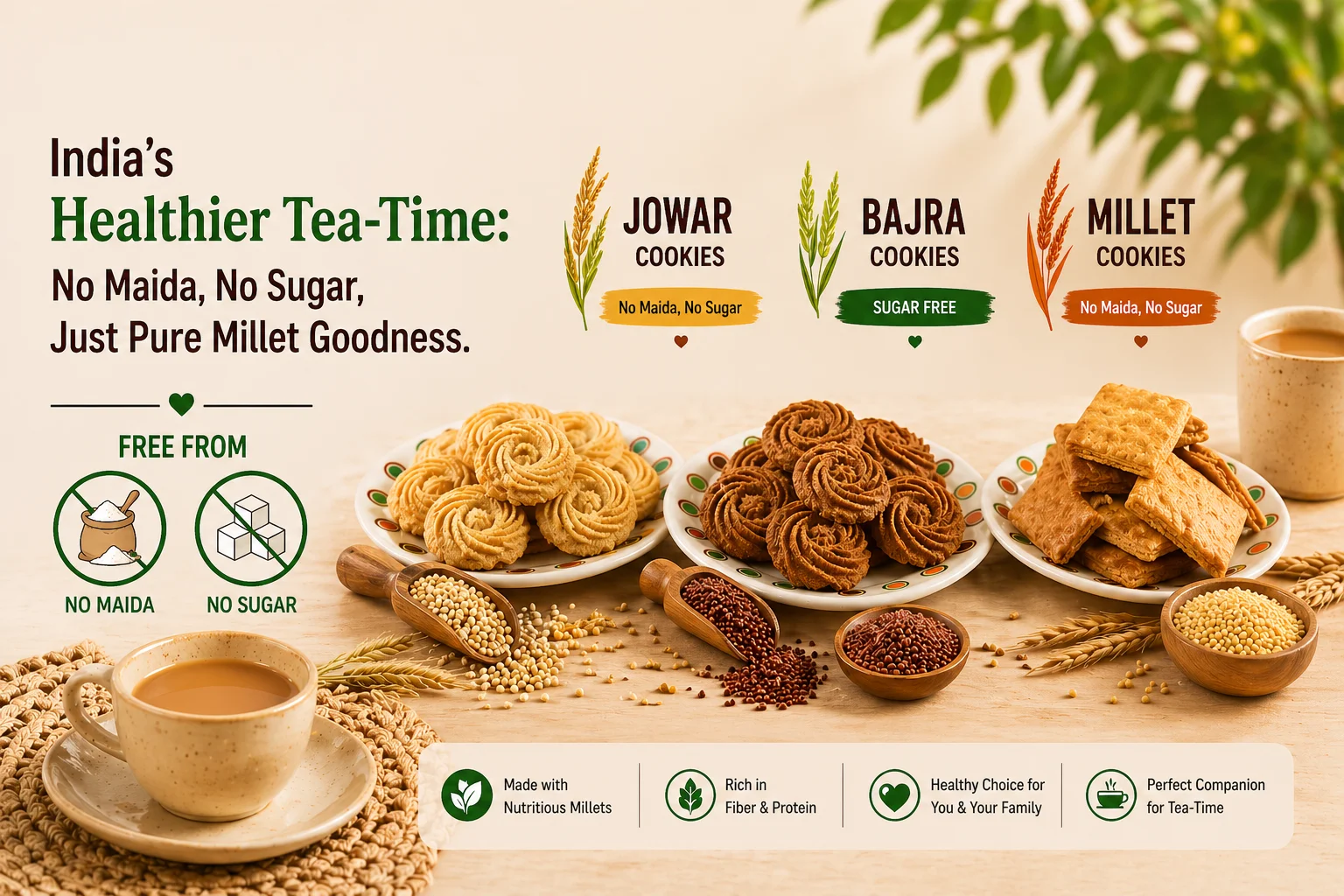
When it comes to everyday snacks and bakery products, maida (refined flour) has traditionally been a popular choice. It gives baked foods a soft texture, light colour and familiar taste. But today, more people are looking for ingredients that fit into a balanced and mindful lifestyle. This is where millets such as jowar, bajra and nachani (ragi) are gaining attention.
At My Smart Bakery, we believe that choosing better ingredients can make everyday snacking more thoughtful without taking away the joy of eating something delicious. That is why we have chosen millet-based ingredients such as jowar, bajra and nachani across our range of products.
So, what is the difference between maida and millet? Let’s understand.
What Is Maida?
Maida is a finely milled and refined form of wheat flour. During processing, much of the outer layers of the wheat grain are removed, resulting in a fine, smooth flour.
Maida is widely used in products such as biscuits, cakes, breads, pastries, cookies and other bakery foods. It is popular because it provides a soft texture and works well in baking.
However, because maida is highly refined, it contains less of the naturally occurring fibre found in the whole grain. For people trying to include more whole grains and fibre-rich foods in their diet, replacing some refined-flour products with whole-grain or millet-based alternatives can be a useful choice.
What Are Millets?
Millets are small-seeded grains that have been consumed in India for generations. They include varieties such as jowar (sorghum), bajra (pearl millet) and nachani/ragi (finger millet).
Unlike highly refined flour, whole millets retain more of the grain’s natural components. They can provide dietary fibre along with important nutrients such as minerals and plant-based compounds.
Millets are also naturally gluten-free, although products made with millet should still be checked for cross-contact if someone needs to strictly avoid gluten.
Maida vs Millet: What’s the Difference?
The biggest difference is the level of processing and the nutritional characteristics of the grain or flour.
Maida:
- Highly refined wheat flour
- Smooth and fine texture
- Commonly used in traditional bakery products
- Lower in fibre than whole-grain alternatives
Millets:
- Whole grains with naturally occurring fibre
- Include jowar, bajra and nachani/ragi
- Provide a variety of nutrients and minerals
- Naturally gluten-free as grains
- Can be used in cookies, breads, snacks and other recipes
This does not mean that every millet cookies product is automatically healthier. The complete ingredient list, added sugar, fats, portion size and overall recipe also matter. A balanced approach is always important.
Why Choose Jowar?
Jowar, also known as sorghum, is a traditional Indian grain that has become popular in modern healthy eating.
Jowar contains dietary fibre and provides nutrients such as iron, magnesium and phosphorus. It also contains plant compounds that contribute to its nutritional profile.
Its mildly earthy flavour makes it suitable for savoury snacks as well as cookies and baked products.
Why Choose Bajra?
Bajra, or pearl millet, has been part of Indian diets for centuries. It is known for its distinctive flavour and nutritional value.
Bajra provides dietary fibre and minerals such as magnesium, iron and phosphorus. Including bajra as part of a varied diet can be one way to add more whole grains to everyday meals and snacks.
At My Smart Bakery, we use bajra to create products that bring the goodness of a traditional grain into a convenient bakery format.
What Makes Nachani Special?
Nachani, commonly known as ragi or finger millet, is another traditional Indian grain that deserves a place on the modern menu.
Ragi is particularly known for its calcium content and also provides dietary fibre, iron and other nutrients. Its slightly nutty flavour works beautifully in baked snacks.
For families looking to experiment with traditional grains in convenient forms, nachani-based cookies can be an easy addition to snack time.
Why Did My Smart Bakery Choose Millets?
We asked ourselves a simple question: Can everyday bakery treats be made with more thoughtful ingredients?
Our answer was to explore traditional grains such as jowar, bajra and nachani.
Instead of relying only on refined flour, My Smart Bakery focuses on incorporating millet-based ingredients into products such as cookies and snacks. The goal is not to make food complicated or restrictive. It is about making small, practical ingredient choices while keeping snacks enjoyable.
We believe that healthy eating does not have to mean giving up taste. It can mean understanding what goes into your food and choosing products that fit your personal lifestyle.
Does Millet Mean You Can Eat Unlimited Cookies?
Not at all.
Millet-based cookies are still snacks, and portion size matters. Even when a product contains nutritious ingredients, it is important to consider the complete recipe, including sugar and fat content.
The smarter approach is to enjoy snacks mindfully and maintain variety in your overall diet.
The Smart Way to Choose Your Everyday Snacks
When buying bakery products, don’t look only at the front of the package. Take a moment to check:
- The ingredient list – See which flour or grains are used.
- Fibre content – Compare nutrition labels when available.
- Added sugar – Check how much sugar the product contains.
- Serving size – Remember that portion matters.
- Overall ingredients – Look at the complete recipe rather than focusing on one “healthy” ingredient.
A Traditional Grain for a Modern Lifestyle
Maida has its place in baking, but there is growing interest in alternatives that include whole grains and traditional ingredients. Jowar, bajra and nachani offer different flavours, textures and nutritional profiles, making them interesting choices for everyday food.
At My Smart Bakery, our aim is simple: to bring traditional grains into convenient bakery products while keeping taste and enjoyment at the heart of snacking.